Next Steps
"The scars of others should teach us caution."
St. Jerome
The above quote is no accident. Consider the quote as you read the questions and answers below.
- Where do you publish your writing? I publish my writing on Amazon through Amazon KDP and on Apple Books. Right now, I do not have any physical copies of my books. Everything is digital.
- Why do you only have your books in digital format? To reduce costs. It is expensive to print and warehouse copies of books.
- Why not use a POD service? Then you don’t have to worry about warehousing books or expensive printing costs. I would not and will not ever use a POD service. Ever. Why? Simply put - the finished product is not professional in appearance or quality. If I am going to create a physical product, then I want something that is going to remain on someone’s bookshelf for years and years. I have books on my bookshelf that have been there for decades. And when the pages are worn thin and the covers are coming off (because I keep pulling my copy from the shelf to enjoy the experience of reading it again and again), then I order a brand new copy. This is done by offset printing - not POD printing. Certainly I have purchased POD printed books…and the covers begin to curl in a few weeks. The paper on the inside doesn’t feel right in my hands. It is an inferior product. Books produced by traditional offset printing look and feel better - professional. And they last longer. The problem with offset printing is that in order to be cost effective you need to order several thousand copies of a book. Then you need to warehouse those several thousand copies of your book. This can be expensive. I know this…because I have done so in the past. I warehoused two thousand copies of my first book for years.
- Will you ever print copies of your books? Yes. Absolutely. When I have a space to store the books. I am not going to pay for storage.
- Do you have your own website? Absolutely. This is a must, in my opinion. If you are going to write and publish books, then you need to have your own website. And no, I am not talking about a short biography on amazon.com or some other author website. You need to have your own site that you control.
- There are lots of inexpensive (or even free) website building and hosting services. Should I use something like that? No. Never. Why not? Because you don’t control it. A bit of advice from Oprah Winfrey. She said, “Own it.” She’s not wrong. You should buy your own domain name and own it. For many of these services, you don’t actually own the domain name. You need to own your own domain name. I am not - emphatically not - going to mention any of the companies that I have dealt with in the past that I no longer use. The list is long. I could engage in a rant about the business practices of some of these companies that I find extremely distasteful, thereby raising my blood pressure to unhealthy levels, but you don’t need to know which companies I no longer use. You need only know that companies that I do use. The next few questions are going to deal with the specifics of website ownership.
- Where should I buy my domain names? I regularly buy domain names. Sometimes something pops into my head and I do a search to see if the domain name is available. If it is, then I will often buy it and hang onto it. I may or may not ever use it, but at least I own it. Please avoid buying your domain names from most providers that you will find when you do a search online. I purchase domains from two places: The XYZ and Pork Bun. Here are links to both services below.
https://www.thexyz.com/domains/
Of the two services, I recommend The XYZ first and foremost. Pork Bun often runs sales on domain names and they use humor to good effect. You will save yourself hours, days, and maybe even months of frustration if you use the xyz.com for not only purchasing a domain name, but hosting your site too. I cannot stress to you enough that most places where you can buy domain names are not worth the trouble…and you will find trouble.
- Should I buy a “.com”, if possible? Or use some other domain name like “.ink” because I am a writer? I recommend buying a “.com”, if possible. If your name is taken, then you might look at something else like ”.io”, but don’t buy something too complicated. Simple is better. For example, I wanted to purchase"holbornhouse.com". It was not available. I opted to purchase "holborn-house.com" instead. Holborn House was where Samuel Johnson lived and worked on his famous dictionary. He was one of the most eminent men-of-letters of 18th Century England. I should have avoided the hyphenated domain name. Too complicated and more difficult for someone to type. Sometimes it does make sense to purchase a domain name without the traditional “.com”. I wanted to purchase the domain name “inside outs”. The “.com” was taken, however, “.io” was not. In my opinion, insideouts.io is so much better because I get to use the first letter of each word in the domain name. Again, my advice is to purchase a “.com”, if possible, and then something easy to remember and type if one is not available.
- When I purchase a domain name at thexyz.com, they ask if I want to purchase the ID Protection too. Should I do that or is it an unnecessary upsell? Buy it. The cost is minimal and it protects your personal information.
- I own my domain name. Where should I host it? Without a doubt, host your site with thexyz.com. I cannot recommend their service enough. Let me tell you a little bit about my journey with this company. About twenty years ago, I was listening to a radio broadcast and learned about this company - thexyz.com - that provided email accounts for businesses and individuals. I liked what I heard and signed up for their email service. It was great. I didn’t use them for anything else. At all. Just email. I used just about everything else under the sun for domain registration, website hosting, and website design, etc.. Let me state this again: I used just about everything under the sun for domain registration, website hosting, and website design, etc.. Now, I use the xyz for just about everything. Why? Because the other service providers that I used engaged in practices that I did not like, the company went out of business, the software was too complicated, the plugin was too complicated, free wasn’t really free, etc., ad nauseam, and the list goes on and on. Suffice it to say that I am extraordinarily pleased with the xyz. They really are amazing.
There are different hosting options when you sign up with thexyz.com. I use the following: Open VZ 4GB (VPS). If you are just starting out, then I would recommend starting with one of their less expensive hosting plans. I use my current plan because it provides faster load times and I can host multiple sites from this account (note: remember what I said about buying domain names? I will sometimes think of a domain name and buy it, if possible. It’s easy to set up a new website with the xyz.). Hosting plans include email. This is a nice feature. I highly recommend using their email service. It is secure…and you own it.
- What questions do you still need answered? Send your questions to contact@penandpapercourse.com.
- I have questions for you...should you choose to provide answers. You are under no obligation to answer any of these questions, but if you are so inclined, then I am interested in the following: What sort of live, in-person training would you like? Does that even interest you? What else do you need to help you on your writing and publishing journey?
You can access this information in a downloadable PDF below.
My Writing
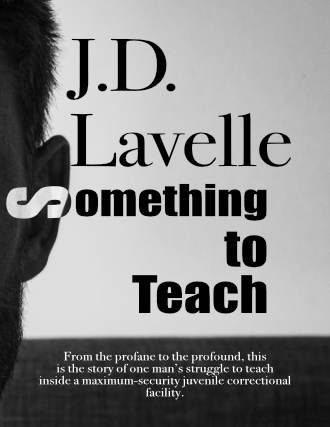
Autobiographical Fiction
Something to Teach
Something to Teach is the unforgettable journey inside the walls of a maximum-security juvenile correctional facility with a teacher who learns that teaching on the inside is not for the faint of heart.
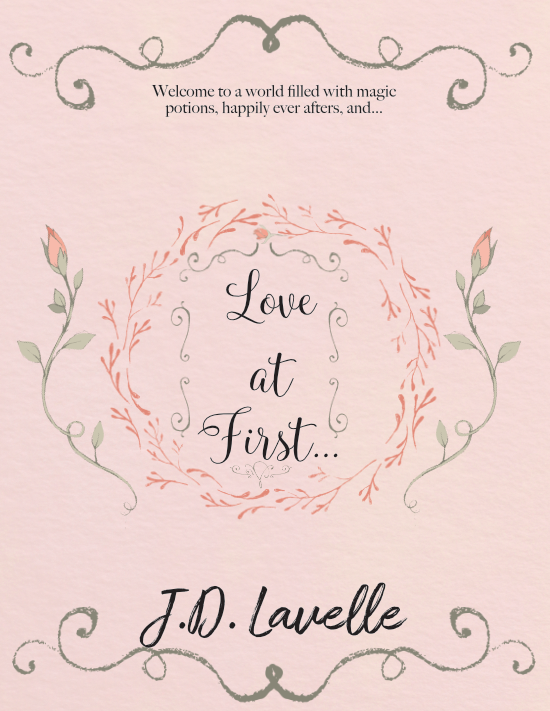
Rom-com
Love at First...
Mariel MacEwan was firmly grounded in reality. She had no time for fairy tales or any other such nonsense. But what happened when a stranger appeared and asked her to dance? And told her that he loved her...that very same night? Mariel learned that "love at first..." was not just the stuff of dreams.
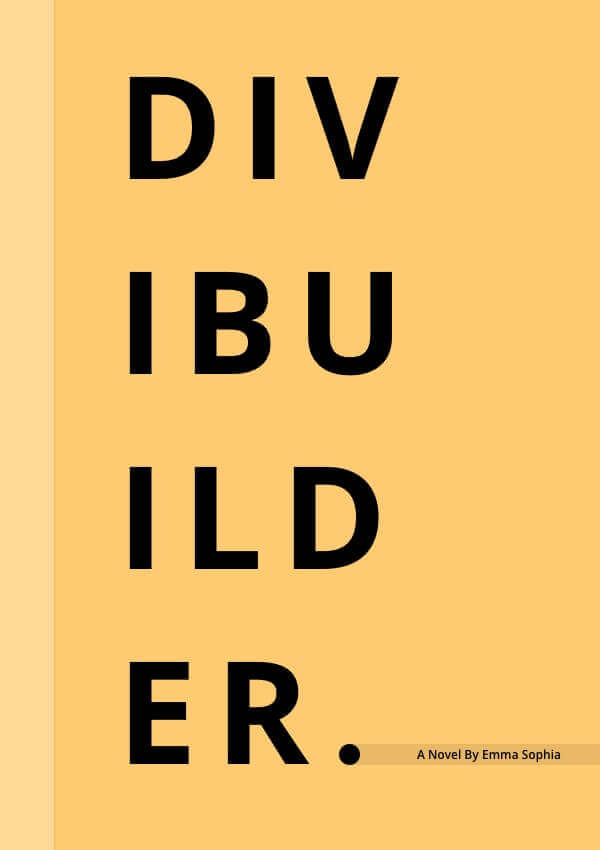
YA Fiction
Locked Up
Things are not okay for Brian as he tries to navigate the perils of life on the inside. He learns that there is only one person that he can count on - himself. And it's his time to do.
Frequently Asked Questions
Where will I take this course?
From the comfort of your own home. Or anywhere you can access (and print) the online materials. This digital age that we live in makes online learning a possibility.
When can I take this course?
You can access the course materials as soon as you purchase it. The one-time fee gives you lifetime access to the course (and subsequent updates to it for as long as the course remains online).
How do I know if this course right for me?
Read my writing. If you like what I write and how I write, then this course is a good fit for you. You should take this course if you want to read a good book. In order to understand what makes for good fiction, you will need to read good fiction.
Who should take this course?
This course is intended for adult learners. You should take this course if you are interested in learning the craft of writing commercial fiction. What do I mean by "commercial fiction"? Simply put, commercial fiction is good storytelling. That is all.
Do I have to enroll in the online course to access Lessons?
No. You do not have to enroll in the course to sign up for a Lesson.
What books have you written?
I am the author of Something to Teach, Love at First..., My Brother's Keeper, Crossroads, and Locked Up. I have been writing and teaching for over twenty-five years. You can see more of my work at jdlavelle.com.
What sort of materials or equipment do I need for this course?
- You need a computer - or some way to access the digital materials.
- You need a printer (or some way to print the PDFs). In the editing section, I want you to print certain pages and then edit them with pen in hand.
- You need a pen or pencil (to edit and revise).

Music is the Metaphor
Music is an oft-used metaphor here at Pen & Paper. It is also the framework for how I think about the teaching and learning the craft of writing fiction.
If you asked me today to go sit in a room, all by myself, and write a story – for hours and hours – then my eyes would light up with anticipation.
Why?
Because that sounds like fun to me. It doesn't sound like work…or worse.
Attend, while I tell a tale.
For most of my formative years I was heavily involved in music. At first, I just loved to listen to music – mostly classical. Then, as I grew up, I learned that I could make music - both as a musician and a composer.
My dream/goal/desire was to be a professional musician. I practiced daily, took private lessons, and was a part of several orchestras in and outside of high school. I was exposed to great musicians, great music, and great music teachers. These experiences stoked the flames. My passion for music, already hot, grew hotter still when I was able to play alongside professionals. This was going to be my life.
There was a grand narrative that I had written in my mind. I would go to the university and then triumphantly emerge from my undergraduate studies with a degree in music performance.
In order to gain entrance to the university's music program, I had to do an audition. It did not go well. I flubbed it – a case of the nerves. Indeed, there was a lot riding on this audition – all of my dreams/goals/desires. It was a blow to my ego but I was undeterred. I enrolled in all of the music classes that I would have otherwise taken had and I been accepted into the program. I even took a class in music composition - if I couldn't make the music, then I would write it. The revised plan was to study music, practice, and audition again after the first semester. It was not unusual to audition more than once before being accepted. It was one of the top programs in the nation.
Over the course of the school year, a realization dawned on me.
“I’m not like these people. At all. I don't think like them. I do not experience the world like them. They are musicians. I am not.”
Certainly, I could read music, discuss music theory, and perform music. I could do all of these things, but I did not think musically. There were no melodies or harmonies running through my head. I had no ear for music - not in the way that a true musician does. It was impossible for me to hear something in my mind and then make that unheard sound a reality.
There was a second audition. A second failure. And a hard dose of reality.
There was a huge leap from being one of the top musicians in a large high school to playing at the collegiate level. A more professional level.
And I was not there.
What was more, I hated sitting in a practice room for hours on end. Not only was I supposed to practice my own instrument, but I had to learn the piano as well. Certainly, in high school I had practiced regularly – daily, but only for about an hour or so. These people - these musicians – practiced for hours on end. Every single day. Sitting alone in a cramped practice room with not one, but two, instruments, was awful.
So what happened to that grand narrative that I had written in my mind?
It had to be scrapped and rewritten…from scratch. Not an easy task. But it was, and is, my work. And I revel in it. It is worth noting, that throughout this site and the courses offered herein, I will ask you to reflect upon your own thoughts about yourself as a writer. This is your work.
So how did I rewrite this narrative? I learned, over time, (and with help) that I am a storyteller. I always have been.
And I learned that music was the background to the narratives that had always been running through my head. We all know that a movie without climactic music swelling at the perfect point is less of a movie. But this music is in the background. It enhances the story, but it is not the story. For me, music was the undercurrent to the stories in my head. I t had always been thus, but I did not know it then. I do know it now.
Okay, so what? What does this have to do with writing?
I like sitting in a room all by myself with pen and paper. Writing. For hours on end. Do you? If you do, then press onward. If not, then please spend the time to figure out what you could and would do for hours on end. Writing - and this course - may not be for you, if you don't like the thought of spending time getting words on the page.
Understand that being a composer of music is very similar to being a composer of words. Both are creative acts.
There are certain books and symphonies that are considered greats. What is it that makes them great? Within each of these disciplines - music and writing - an artist must have both skill and experience in order to make something praiseworthy. Skill and experience make for good craftsmanship. And both types of composers need to practice their craft.
And that takes time and practice.
Can you sit for hours and hours...writing? And do you like telling stories? If so, then Pen & Paper may be for you.
__________
So what about the more? The framework? How do I think about the teaching and learning the craft of writing fiction?
I think it is best approached in the same manner that Mozart and Beethoven learned to compose music. They were taught the basics of music theory and then took lessons from teachers. There was no formal university education - it was more of an apprenticeship. That is how I designed Pen & Paper. Think of the course components as the "music theory" and the lessons offered herein as putting the theory into practice.
Many online writing courses combine both instruction with a review of student writing. I have separated the two...for a reason. To save you money and potential frustration. Remember, writing is a creative act and nothing stifles creativity more than pressure. If you feel constrained to write something for this course, then you might feel pressure and subsequently have difficulty getting words on the page. You don't have to write a single word when you register for the course. It is entirely up to you how you want to engage in the course materials. Obviously, I would like you to write and work on your own writing, but there is no obligation to do so. You are free to pursue your writing as you see fit. When you are ready to have me look at your writing, then you can take a lesson. On your time.
Qualifications & Awards
Education
- Master’s Degree in Business Administration (MBA) from Harvard Business School.
- Certified Professional Coach (CPC) from the International Coach Federation (ICF).
- Bachelor’s Degree in Economics from Stanford University.
- Advanced Certification in Strategic Leadership from the Wharton School.
Experience
- Over 15 years of experience in business coaching and consulting across various industries.
- Successfully led strategic planning and leadership development initiatives for Fortune 500 companies.
- Extensive background in startup mentoring and organizational transformation.
- Proven track record of driving measurable improvements in business performance and team dynamics.
Recognition
- Awarded “Top Business Coach” by the Global Coaching Awards in 2023.
- Recognized as a “Top 100 Business Influencers” by Business Insider.
- Featured speaker at the International Business Coaching Conference.
- Honored with the “Leadership Excellence Award” for outstanding contributions to executive coaching.
Music is the Metaphor
Music is an oft-used metaphor here at Pen & Paper. It is also the framework for how I think about the teaching and learning the craft of writing fiction.
If you asked me today to go sit in a room, all by myself, and write a story – for hours and hours – then my eyes would light up with anticipation.
Why?
Because that sounds like fun to me. It doesn't sound like work…or worse.
Attend, while I tell a tale.
For most of my formative years I was heavily involved in music. At first, I just loved to listen to music – mostly classical. Then, as I grew up, I learned that I could make music - both as a musician and a composer.
My dream/goal/desire was to be a professional musician. I practiced daily, took private lessons, and was a part of several orchestras in and outside of high school. I was exposed to great musicians, great music, and great music teachers. These experiences stoked the flames. My passion for music, already hot, grew hotter still when I was able to play alongside professionals. This was going to be my life.
There was a grand narrative that I had written in my mind. I would go to the university and then triumphantly emerge from my undergraduate studies with a degree in music performance.
In order to gain entrance to the university's music program, I had to do an audition. It did not go well. I flubbed it – a case of the nerves. Indeed, there was a lot riding on this audition – all of my dreams/goals/desires. It was a blow to my ego but I was undeterred. I enrolled in all of the music classes that I would have otherwise taken had and I been accepted into the program. I even took a class in music composition - if I couldn't make the music, then I would write it. The revised plan was to study music, practice, and audition again after the first semester. It was not unusual to audition more than once before being accepted. It was one of the top programs in the nation.
Over the course of the school year, a realization dawned on me.
“I’m not like these people. At all. I don't think like them. I do not experience the world like them. They are musicians. I am not.”
Certainly, I could read music, discuss music theory, and perform music. I could do all of these things, but I did not think musically. There were no melodies or harmonies running through my head. I had no ear for music - not in the way that a true musician does. It was impossible for me to hear something in my mind and then make that unheard sound a reality.
There was a second audition. A second failure. And a hard dose of reality.
There was a huge leap from being one of the top musicians in a large high school to playing at the collegiate level. A more professional level.
And I was not there.
What was more, I hated sitting in a practice room for hours on end. Not only was I supposed to practice my own instrument, but I had to learn the piano as well. Certainly, in high school I had practiced regularly – daily, but only for about an hour or so. These people - these musicians – practiced for hours on end. Every single day. Sitting alone in a cramped practice room with not one, but two, instruments, was awful.
So what happened to that grand narrative that I had written in my mind?
It had to be scrapped and rewritten…from scratch. Not an easy task. But it was, and is, my work. And I revel in it. It is worth noting, that throughout this site and the courses offered herein, I will ask you to reflect upon your own thoughts about yourself as a writer. This is your work.
So how did I rewrite this narrative? I learned, over time, (and with help) that I am a storyteller. I always have been.
And I learned that music was the background to the narratives that had always been running through my head. We all know that a movie without climactic music swelling at the perfect point is less of a movie. But this music is in the background. It enhances the story, but it is not the story. For me, music was the undercurrent to the stories in my head. I t had always been thus, but I did not know it then. I do know it now.
Okay, so what? What does this have to do with writing?
I like sitting in a room all by myself with pen and paper. Writing. For hours on end. Do you? If you do, then press onward. If not, then please spend the time to figure out what you could and would do for hours on end. Writing - and this course - may not be for you, if you don't like the thought of spending time getting words on the page.
Understand that being a composer of music is very similar to being a composer of words. Both are creative acts.
There are certain books and symphonies that are considered greats. What is it that makes them great? Within each of these disciplines - music and writing - an artist must have both skill and experience in order to make something praiseworthy. Skill and experience make for good craftsmanship. And both types of composers need to practice their craft.
And that takes time and practice.
Can you sit for hours and hours...writing? And do you like telling stories? If so, then Pen & Paper may be for you.
__________
So what about the more? The framework? How do I think about the teaching and learning the craft of writing fiction?
I think it is best approached in the same manner that Mozart and Beethoven learned to compose music. They were taught the basics of music theory and then took lessons from teachers. There was no formal university education - it was more of an apprenticeship. That is how I designed Pen & Paper. Think of the course components as the "music theory" and the lessons offered herein as putting the theory into practice.
Many online writing courses combine both instruction with a review of student writing. I have separated the two...for a reason. To save you money and potential frustration. Remember, writing is a creative act and nothing stifles creativity more than pressure. If you feel constrained to write something for this course, then you might feel pressure and subsequently have difficulty getting words on the page. You don't have to write a single word when you register for the course. It is entirely up to you how you want to engage in the course materials. Obviously, I would like you to write and work on your own writing, but there is no obligation to do so. You are free to pursue your writing as you see fit. When you are ready to have me look at your writing, then you can take a lesson. On your time.
Qualifications & Awards
Education
- Master’s Degree in Business Administration (MBA) from Harvard Business School.
- Certified Professional Coach (CPC) from the International Coach Federation (ICF).
- Bachelor’s Degree in Economics from Stanford University.
- Advanced Certification in Strategic Leadership from the Wharton School.
Experience
- Over 15 years of experience in business coaching and consulting across various industries.
- Successfully led strategic planning and leadership development initiatives for Fortune 500 companies.
- Extensive background in startup mentoring and organizational transformation.
- Proven track record of driving measurable improvements in business performance and team dynamics.
Recognition
- Awarded “Top Business Coach” by the Global Coaching Awards in 2023.
- Recognized as a “Top 100 Business Influencers” by Business Insider.
- Featured speaker at the International Business Coaching Conference.
- Honored with the “Leadership Excellence Award” for outstanding contributions to executive coaching.
